Reality, Image, Digital Visualisation, Hyper – realism, Ethics, Simulation, Authenticity.
Abstract
Visualisations have now reached such a high standard where they can no longer be distinguished from real photographs; largely unbeknown to the public. For example, the 2017 Ikea catalogue is compiled of at least 75% CGI imagery. There is currently a growing demand for hyper – realistic visualisations of interior design proposals within the industry. The public have now also become consumers of these images, via marketing, advertising, and social media sites; such as Pinterest and Instagram. This article focuses on how the introduction of the computer as a ‘tool’ for visualisations has impacted the interior design industry; by analysing practice, technology, technique, and perception. This is achieved through studying examples of hand-drawn, abstract and CGI visualisations; noting both process and aesthetics. Further, in examining the differences, I establish whether authenticity is no longer of significance to the observer.
My research concludes that what may at first appear to be hyper-real is in fact the reality in which we are all now living. We are active participants. However, with these new digital ‘tools’ obtained comes a responsibility for truth and awareness of wider ethical responsibilities when creating visualisations for public consumption. Primarily, avoiding unlabelled, illusory representations which neither exist nor can be realised. Establishing a national code of conduct would help to regulate visualisations and my analysis of the examples will lead to an understanding of the guidelines that this might entail.
We now live in an age where we are constantly bombarded with imagery, through numerous and varied sources. We consume images daily, both consciously and subconsciously. We are producers of imagery. We actively partake in the exchanging of images, via digital devices. We choose different filters for our photos, to project the ‘reality’ we want others to see. In his book The Embodied Image, Finnish architect, and architectural theorist, Juhani Pallasmaa, observes that we now live ‘In a culture dominated by vision to the degree that vision has been accepted as the metaphor for truth.’ (Pallasmaa, 2011: p.23) However, it might be argued that though we play along, we are aware, on some level, of the images illusionary lustre. The interior design profession, as producers of images for consumption, have a responsibility to their audience to portray authenticity; in the same respect that photojournalists and fashion editors do. Albeit notoriously hard to monitor, such ethical codes of conducts are important within these industries non-the less; to establish clear guidelines and clarification of the point at which something becomes unethical practice.
Practice
With the introduction of computers to the interior design practice, the tools in which they communicate their designs has changed dramatically. Historically, an interior designer would draw by hand, from sketching initial ideas, through to hand drafted plans. A series of colour pen/pencil visualisations might be produced to beguile the client in its final stages. Even a handmade model. These are all skills which an interior design student continues to learn and hone today. Each tool being an important part of the design process, for differing purposes. For the client, however, vision is the primary means by which they will come to understand the design and remains integral for communication purposes. This might begin to explain the preoccupation and importance placed largely on an interior designers’ visualisations.
Technology
The addition of computer systems such as CAD, Sketchup, 3D Max and Photoshop assist the interior designer by making their practice more efficient, accurate and productive. With a click of a mouse, adjustments and alterations can be made, to 3D models, floor plans and images, etc. Any necessary changes to a project become much easier and far less time consuming than hand drawn elements, which might have to be redone from scratch. Files can be shared in real time online and there are a great number of other benefits to both designer and client.
Primarily, visualisations are used to promote a project, usually un-built and seeking government planning approval, a client sign off, or as a property marketing tool to sell off plan. Most recently hyper-realistic CGI visualisations have entered the visual realm, though often outsourced, due to their complexity and timescale. Such imagery has emerged as an art form in its own right, creating job roles for CGI artists across many design fields. Aided by the internet and social media, these images, which were once seen by few, can now be viewed by the wider public. Whilst now addressing this larger audience and clients alike, it becomes an interior designer’s responsibility to present visualisations truthfully, so as not to mislead the viewer. In The Embodied Image, Pallasmaa recalls sculptor Richard Serra’s views on the merging of architecture and art, quoting him as saying ‘I would think that architects (..) would come to understand that they are basically in a service profession, not an artistic endeavour’ (Serra, 2011, cited in Pallasmaa, 2011, p.98). Alluding that perhaps the architect and interior designer likewise have become consumed by producing images of their work over the design and functionality for which it is intended.
Hyper-realistic CGI has long been used in car advertising, product imagery and fashion photography; closely associated with Photorealism. The term Photorealism was first used in the 1960s for a style of painting characterised by its meticulous attention to detail. Often using photographs to create paintings that appear to be photographic. In the 1970s the term hyperrealism first emerged to describe a resurgence of high quality realism in sculpture and painting at the time. It developed further from Photorealism in the early 2000s, due to advancement in techniques and digital aids. The fundamental difference is the artist’s approach to their work. Whilst Photorealists strive to remove emotion from their work, often to the extent of capturing banal subject matter, Hyperrealists desire to include narrative and evoke atmosphere and feelings. Today it is widely accepted that a photo is not ‘reality’, especially now with post production manipulation techniques, such as Photoshop, readily available. Lev Manovich, one of the leading theorists of digital culture, highlights in his article ‘’The paradoxes of digital photography’’ that ‘the (field) defines realism as the ability to simulate any object in such a way that its computer image is indistinguishable from its photograph’. Today’s CGI advancements may now be able to fake hyperrealism but ultimately fail to imitate reality itself, as Manovich elaborates, ‘what computer graphics has (almost) achieved is not realism, but only photorealism – the ability to fake not our perceptual and bodily experience of reality but only its photographic image’. In other words, hyperrealism and photorealism allude to a photographic image and a photographic reality, but not the reality we experience as human sensory beings.
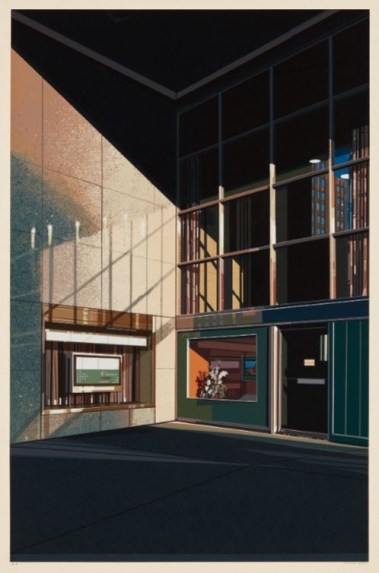
Fig 1. Richard Estes ‘Urban Landscaper No.2’, 1979 (Photorealism)
CGI for the interior designer offers extraordinary opportunities for creative freedom, as well as a way of reducing costs and delivering images in a fraction of the time otherwise required to build prototypes or construct sets for photo shoots. Home furnishings giant, Ikea, have managed to massively reduce their production overhead by creating a CGI library of thousands of their products to date. This has negated the need for costly set constructions, set builders and photographers. Most images in their recent catalogue are CGI models, now constructed digitally. This also allows for flexibility to alter materials or colour variations, as and when required.
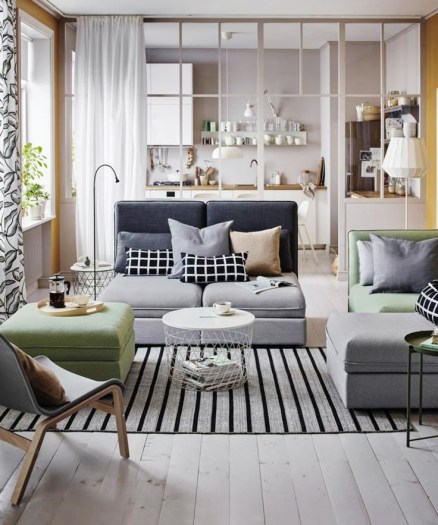
Fig 2. Ikea catalogue, 2018 (CGI)
An Interior Designers’ visualisations were previously limited to his/her own ability and the medium by which they chose to create their ‘artist’s impression’. The computer as a ‘tool’ has altered this exercise in many respects. With every advancement, their ability to interpret what a space will look like has improved, as too has their propensity to make that space appear more desirable, with the focus becoming primarily about aesthetics. Juhani Pallasmaa noted that; ‘Architecture is increasingly turning into the fabrication of seductively aesthetic images without roots in our existential experience and devoid of authentic desire of life.’ (Pallasmma, 2011: p.119) Perhaps symbolic of Architecture and Interior Designs’ growing obsession with images; seemingly detached from reality. Joel Wenzel, contributing author for CLOG’s book titled Rendering, observes that ‘The image exists independent of the concept, to be evaluated as a graphic. Architecture by graphic design’ (Wenzel, p.73) It might be conceivable, therefore, that the increase in production of such imagery misleads both clients and the public into believing and expecting a standard of impossible perfection. Herein, we begin to understand the ethical dilemma of the designer. They have use of (or access to) a tool which enables them to present their designs to the client in a hyper-realistic and sophisticated manner, yet how far they choose to manipulate and embellish these images is currently left entirely to their own discretion. This could potentially lead to a lack of trust between designer and client, as well as public consumers of the imagery, reflecting negatively on the industry as a whole. Establishing guidelines surrounding the point at which false representation becomes unethical might be a way of restoring trust.
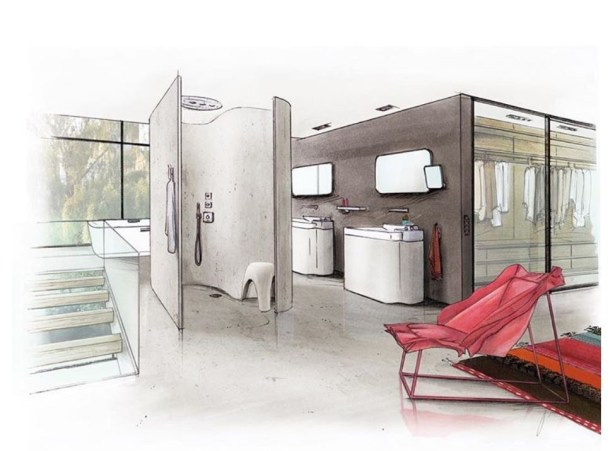
Fig 3. Stephan Pöppelmann, 2015 (hand drawn)
Technique
Stephan Pöppelmann is a German designer, specialising in bathroom design. He hand-draws all his visualisations. It is obvious to the viewer that the image is neither a photo, nor an attempt at a hyper-realistic interpretation of the space. Yet the artist has paid great attention to detail, which allows us to imagine the space could become real. He has achieved aesthetic similarities to that of a computer generated visual, which may or may not be intentional. This type of visualisation is referred to as ‘loose-realism’ by Karl Kullman, in his article written for the Journal of Landscape Architecture, titled ‘Hyper- Realism and loose-reality: the limitations of digital realism and alternative principles in landscape design visualisation’. In it he theorises that loose-realism ‘infers a visual style that meets the objectives of most (landscape) design visualisation to differentiate useful spatial, material, and atmospheric information about a design, while also maintaining a degree of openness for interpretation. In contrast to the complete but deceptive nature of hyper-realism’. Consequently, this visualisation is obviously an unfinished artist’s impression; one that does not propose to simulate the finished result, or pretend otherwise.
The unique marks of the artist’s hand are visible on the paper and evident of the artist’s connection to his work and thought processes. Pallasmaa asserts that in contrast, ‘the Computer creates a distance between the maker and the object, whereas drawing by hand as well as model-making put the designer into a haptic contact with the object or space’ (Pallasmaa, 1996: p.13) Similarly, it could be said that computer generated imagery eliminates the fundamental physical and tactile connection between the designer and the object or space of their design.
Despite no people being present in the scene, human occupancy is alluded to by the clothes hanging in the closet, toiletries beside the wash basins, and a robe hanging beside the shower. This is a visualisation of a functional space, in which people will perform daily routines. The client will instinctively want to envision how they would use the space.
The artist has made efforts to distinguish between the materials within the space, however, the material selection would be decided together with the designer, as part of the continuation of the design process. In this way it incorporates sense of touch as well as sight. The openness of this hand drawing approach to visualisations lends itself to conversation between client and designer, as opposed to the clarity of hyper-realistic images which make the project appear resolved and complete; seemingly ‘too perfect’. Thus, the client may feel obliged to agree to the design more readily than they would otherwise.
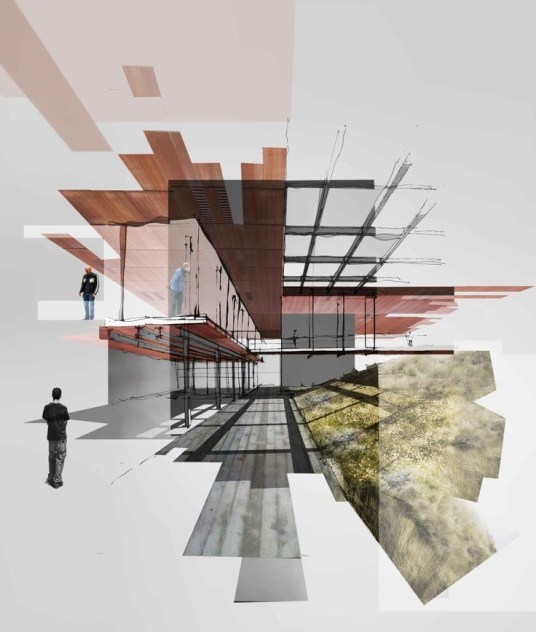
Fig 4. Unknown artist (mixed media: collage/drawing/Photoshop)
Above, an example of an abstract visualisation demonstrating a developmental space; one which would require further discussion and resolving but serves to express the designers’ initial ideas and thought processes.
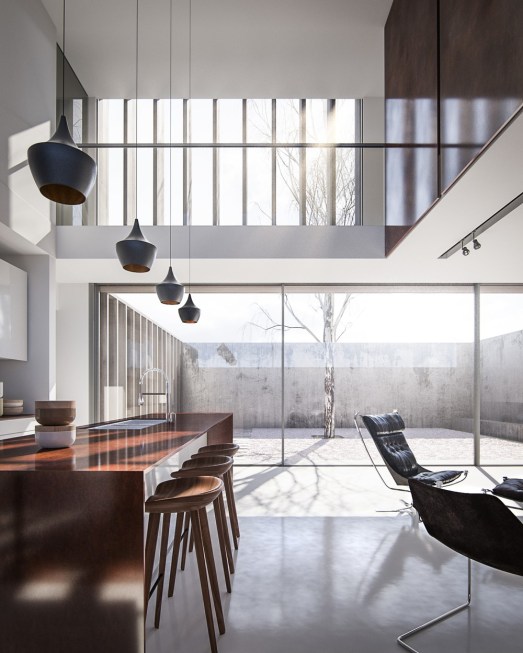
Fig 5. Peter Guthrie, 2017 (Sketchup, 3D Max, V-ray, Photoshop)
Peter Guthrie, Architect, and renowned visualisation artist (the latter he disputes), produced this image using a combination of Sketchup (a 3D modelling programme) V-ray (a rendering plug in), 3D Max and Photoshop. All common place in today’s interior design practice.
At first glance it could be mistaken for a photograph, such is the realistic attention to detail. Tellingly Guthrie admits he is inspired by architectural photography. In resembling a photo, whilst generating atmosphere, this is an example of hyperrealism. Hyper-realistic architectural imagery relies heavily on composition, light, shadow, and reflection. These qualities are what is believed to create the ‘magic’ that evokes atmosphere within the image.
The ‘virtual camera’ is positioned at eye-level, helping the observer to interpret the space. The image presents itself as finite, no blurring around the edges, nothing left to uncertainty. The representation of light and shadow appears to be remarkably accurate. We are given the impression that the moment was ‘captured’ like a snap shot, bathed in the morning light, perhaps just before the home’s occupants had awoken. Yet there is no evidence of human life. No people are present in this ‘home’, nor any signs of interaction with the space. In his book Simulations, French socialist, philosopher and cultural theorist Jean Baudrillard revealingly asserts that ‘Simulation is seen as a form of philosophical idealism, in which the ‘reality’ of everyday events is completely denied’ (Baudrillard, 1983: p.23). Such images are seductive in that they don’t reflect our average everyday existence but instead offer us something aspirational that doesn’t already exist.
Outside stands a single bare tree. It evokes a feeling of winter, cold and crisp, similarly reflected inside. But where is the context in which the building stands? What about the materiality? Astutely Pallasmaa reveals that ‘Computer imaging tends to flatten our magnificent, multisensory, simultaneous, and synchronic capacities of imagination by turning the design process into a passive visual manipulation, a retinal journey.’ (Pallasmaa, 2009: p.97). As an architect, he is clearly aware of the importance of a multisensory, comprehensive approach to design, in order to understand three-dimensional space, which cannot truly be appreciated through computer imagery alone.
The image is too convincingly perfect for it to be a photograph of a real space. (Though it ‘exists’ as a three-dimensional space within the computer programme Sketchup). Rex Butler explores Baudrillard’s theory on reality in his book titled The Defence of the Real. He hypothesises that ‘at a certain point in its progress it draws too close to the original, and further increases in perfection, instead of bringing the system closer to this original, only drive it further away […] It is this reversibility, this difference between the original and the copy, that we call seduction.’ (Butler, 1999: p.25). We can relate the image to our own reality, with its realistic characteristics, and yet it goes beyond our reality and points towards an idealistic future reality. In this way, the image caters to the fantasies of the observer like an advertisement.
We view these images framed within the glazed windows of our electronic devices, or magazines; often in our own homes, surrounded by the everyday chaos of our lives. Somehow our own ‘reality’ doesn’t live up to the ones glowing at us from our back lit digital devices.
In his essay ‘‘Digital Deception’’, Belmont Freeman complains of our obsession with the perfect, often Photo-shopped image: ‘Our eyes are trained to believe that a photograph is a true representation of an existing condition. Thus, in the digital age the graphic representation of architecture has moved beyond an exercise in persuasion; it has become an exercise in deception.’ (Freeman, 2013: p.3). However, it might be argued that we are no longer naive as to believe the camera, nor digital images, knowing what we know as producers of such imagery ourselves. Yet despite this knowing and because the image is attempting to ‘appear’ as a photograph, we automatically make the assumptive link between photograph and ‘reality’.
Architecture and interior design is primarily about people and yet were these spaces created purely to be framed and viewed as soulless two-dimensional images? Seductive representations beyond the reach and accessibility of the average person. As Pallasmma noted, ‘all meaningful architectural images speak of the continuum of human culture and life, not merely of technology, reason or distinct aesthetic preferences. It seems paradoxical, indeed, that architecture, the art form which arises directly from activities of life and deliberately serves the practical purposes of life, would have turned into the art form that is often most devoid of life.’ (Pallasmma, 2011: p.57). CGI may have become the best tool available to interior designers for communicating their designs, but at what cost? The argument is clear, ethics versus aesthetics. Evidently there needs to be a change in attitude and practice which addresses the balance between aesthetics and intelligent design.
In his defence, Peter Guthrie prefers not to be referred to as an ‘architectural visualiser’. In an interview with Paper, a monthly online independent architecture magazine, he states, ‘I’m not even comfortable with the title architectural visualiser as architectural visualisation is too often seen as a service industry where the most valuable aspect is how quickly images can be produced.’ (Paper, 2015). Instead he considers what he does a craft, the mouse his tool. It can take him months to produce a series of images. Ideally visualisations undertaken by a CGI artist should be clearly labelled as such, avoiding any cause for misinterpretation by the viewer.
Perception
People may not be aware of the time it takes to create such images, and yet this is the new standard by which all practicing architects and interior designers must reach, or so the client now demands. It is no wonder interior design practices now outsource to specialist artists to produce hyper-realistic visualisations of the spaces they have meticulously created, relinquishing control to a faceless digital wizard who may well interpret the design in a whole other light.
Hyper-realistic visualisations published on the internet change the way the public perceive interior design by making un-built design more immediate to the public, which in turn allows for conversation about the built environment. It can broaden the public’s experiences of interior design, without having to travel in person. Yet it can be argued that nothing compares to standing within a building and immersing all your senses. Pallasmaa observes; ‘I set myself in the space and the space settles in me.’ (Pallasmaa, 2009: p.104). This is the ‘aura’ observed and documented by Walter Benjamin in his article ‘’The Work of Art in the Age of Mechanical Reproduction’’. Benjamin insists that ‘every day the urge grows stronger to get hold of an object at very close range by way of its likeness, its reproduction’. (2005). Despite him referring to works of art, this could easily be interpreted in the same way for CGI visualisations, which are now equally revered and recognised as a digital art form, being shared, and reproduced online. Benjamin elaborates that ‘even the most perfect reproduction of a work of art is lacking in one element: its presence in time and space, its unique existence at the place where it happens to be.’ (2005). New technological advances might bring us ever closer to imagining the real but arguably architecture and interior design can never be fully understood in two dimensions alone. Still, the facts remain that realism has become a commodity, one that can now be bought and sold.
Most people find it hard to interpret a drawn line, whereas society has become familiar with CGI via films and video games, etc; enabling people to place themselves in a space designed in 3D, as opposed to imagining themselves in a 2D environment. Certainly, Virtual Reality (VR) systems will go even further to immerse the client, and or public, into a whole new way of experiencing interior design, one less reliant on two-dimensional representation. It already incorporates other senses, such as spatial awareness and touch, which are intrinsic to understanding a three-dimensional space. Pallasmaa supports this theory by concurring that ‘much architecture is produced under the consideration of only one sense – sight.’ And that ‘suppression of other senses has led to a feeling of detachment and alienation.’ (Pallasmaa, 1996: back cover). Rather, a fully integrated approach to designing and representing a space is needed; one which includes and promotes hand drawing, model making and abstract visualisations, as well as finalised CGI renderings, where deemed appropriate. If this is more evident in interior design practices again, then perhaps a truer portrayal and understanding of interior design will be publicly revealed.
Nowadays the emphasis appears to be on the finite, ‘perfect’ image; once the product of the designer, now the property of the consumer. In his essay ‘’Digital Deception’’, Belmont Freeman laments; ‘I feel that there are serious ethical questions at play here, beyond the basic question of how much digital ‘’correction’’ is permissible before the image becomes fraudulent. One might argue that the production of hyper-idealized images of architecture is itself a form of art and that nobody is harmed by it; but that is not the case’. (Freeman, 2013: p.6). Freeman goes on to make comparisons with the fashion world; how regulations now attempt to prevent heavy handed airbrushing and photoshopping images, employed so that the models’ bodies conformed to industry requirements. Architecture and interior design are similarly facing questionable behaviour. Interior design is fundamentally about materials and three-dimensional spaces, for occupation of human beings, not art for art’s sake. Freeman emphasises ‘Its success or failure depends on multiple factors beyond visual appeal, including scale, transmission of light, environmental comfort, acoustics. The two-dimensional graphic representation of architecture has, traditionally, been the precursor or subsequent by-product of architecture – but never a substitute. A digital image may be a powerful artistic or theoretical conception, but it is not architecture’. (Freeman, 2013: p.7). The current challenge for the architect and interior designer is to educate the wider public about what designing a building, or a space really involves, not limited to the aesthetics. Though the many practical elements won’t appear so alluring as a beautifully framed image that allows our minds to consume and fantasise. Architect and sociologist Victor Tsu declares in Rendering by publishers CLOG that ‘renderings are to architecture what trailers are to a movie’. In other words, the best bits, exaggerated for the viewers gratification.
Conclusion
As Rex Butler elaborates on Jean Baudrillard’s theories on simulation, in his book The defence of the real, ‘The aim of simulation is not to do away with reality, but on the contrary to realise it, make it real. Simulation in this sense is not a form of illusion, but opposed to illusion, a way of getting rid of the fundamental illusionality of the world’. (Butler, 1999: p.3). Consequently, CGI is not a lesser portrayal of our own reality, more simply, a realistic interpretation of another reality.
Whilst acknowledging this phenomenon exists, as well as public apathy towards it, it should not continue to be ignored. The responsibility must fall to the practitioners and the interior design industry to find ways to bridge the gap between artistic representations and built reality. Juhani Pallasmaa makes clear his thoughts on the responsibility of today’s architects’, and likewise interior designers’ in his book The Embodied Image, stating that ‘The task of the critical, profound and responsible architect is to create and defend the sense of the real. Instead of creating, or supporting a world of fantasy, the task of architecture is to strengthen our experience of the real in the spheres of perception and experience, as well as in cultural and social interaction’. (Pallasmaa, 2011: p. 23). Practically this might involve implementing a national code of conduct by way of regulating visualisations of proposed buildings and spaces. Such a code could dictate that CGI visualisations are depicted in their natural surroundings (providing photographic evidence) and that they are not overtly embellished and certified as such. Ideally, they would more openly embrace the functions and practicalities of real life, as opposed to whitewashing them; observing and reflecting how everyday people would naturally interact with the space. All visualisations might also be required to clearly label the processes by which they were produced, to avoid confusion. Despite how real they may appear, to the untrained eye, they deserve clarification for the client and wider audience as purely ‘artists’ impressions’. Furthermore, the interior design industry will be better respected for its ethical stance and a comprehensive skill set not merely reduced to the aesthetic merits of its visualisations.
 my design soup