For project 3 this semester I had to design a piece for manufacture. It could be a fixture to go within the Dom-ino house I had designed, a treatment, a piece of furniture, or lighting.
I decided I wanted to try and incorporate a lighting element into my piece. As the main feature of my house design is gabion baskets, I thought I’d like to experiment with the idea of light shining through mesh, perhaps containing another object or material.
I also wanted to include concrete in my design, as a nod to Le Corbusier’s love of concrete forming.
Initially I began casting concrete in various moulds. My first attempt was a cylindrical concrete form, made using different sized cardboard tubes. I mixed quick set concrete, however, in filling the moulds the concrete already began to go off and I knew that it wasn’t going to work out as I’d intended.
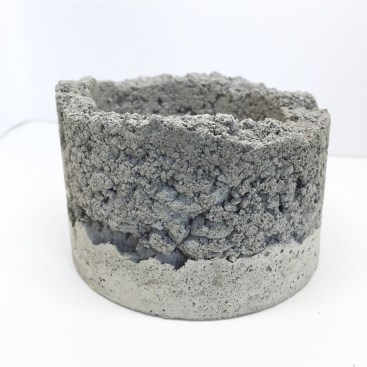
Unfortunately the concrete crumbled on removal from the card moulds. I actually like the textural qualities it has and the contrast between where it was still a loose consistency , to where it had begun to dry and set.
My next attempt was with regular setting cement mix, 1 part to 2 parts aggregate. Here I achieved a much smoother finish but still with textural interest. By inserting the mesh into the concrete, this helped to strengthen the structure. I played with light shining through the cylinder, which throws interesting shadows onto surrounding surfaces.
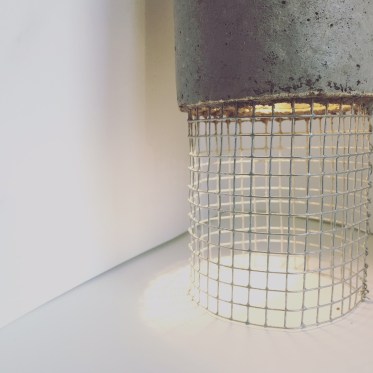
I also carried out a number of tests using different strengths of red pigments.

As I have used pink Pennant sandstone in my house design, I crushed some into aggregate and added it to the cement mix.

I then began experimenting with mesh and taking silicon impressions, as well as incorporating mesh within the concrete.
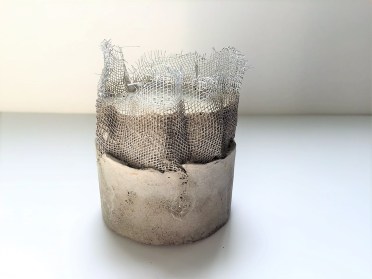
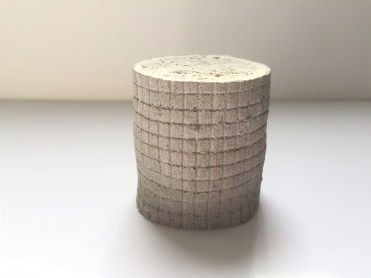
Some where more successful than others.
I discovered that by using finer aggregate, such as sand, and by using a smooth surface mould like plastic, I could achieve a more refined glass like finish. I liked the idea of refining industrial materials to give them a sleeker finish.
Next I began the process for what would become my gabion inspired light.
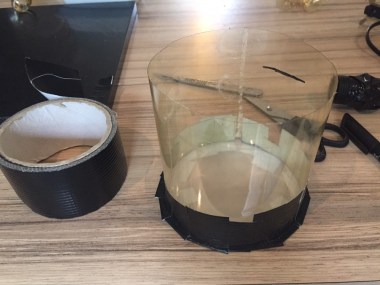
I first made a mould out of a 2 litre drink bottle. I secured the base with duct tape to ensure there would be no leakages.
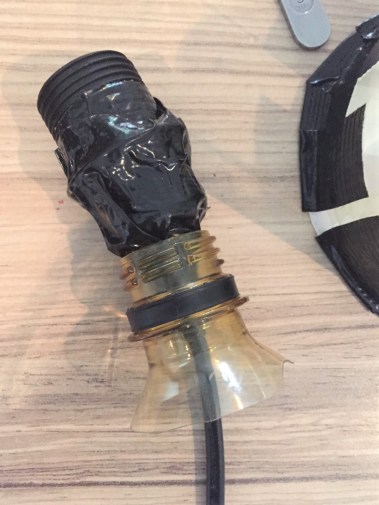
Next I fashioned a support in which to hold the light fitting element, out of the bottle neck. This was positioned in the centre of the base mould.
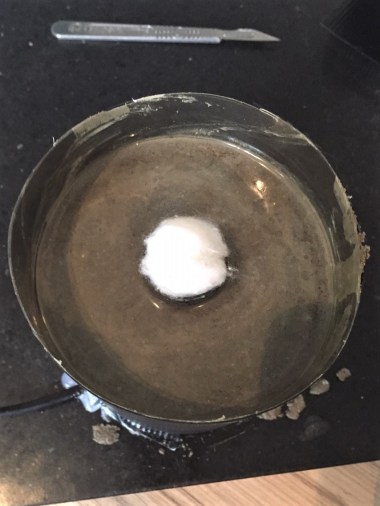
I had to stuff the lighting element with cotton wool so that during the curing process any condensation wouldn’t pool inside. I also had to fashion a cardboard cuff around the plastic mould as once I’d started to pour the concrete mix in, it soon began to warp and buckle under the strain.
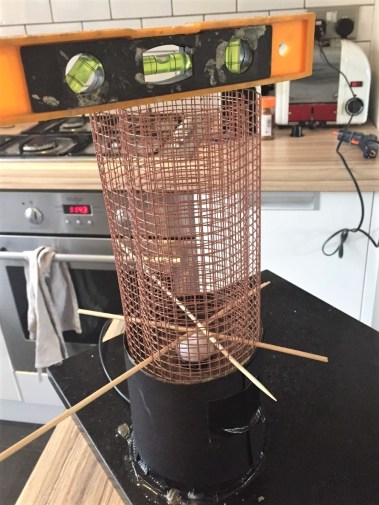
Here I positioned the mesh cylinders, one inside the other. To avoid them sinking I slotted skewers through as supports and made sure that it was all positioned correctly and level. Finally I covered the entire form with cling film and plastic bags and left to set for four days.

This is an image of the finished prototype. I added a polypropylene diffuser in the centre and shattered windscreen glass contained within the mesh cylinders. I experimented with various different fills, such as sea glass, quartz stones, as well as without a diffuser, or anything inside. Each time a different ambience was achieved and variations in shadows and light emittance. I like this customisable element to my design as it retains some individually in what was designed to be a manufactural piece.
 my design soup